
Iran conflict worries CVHS students
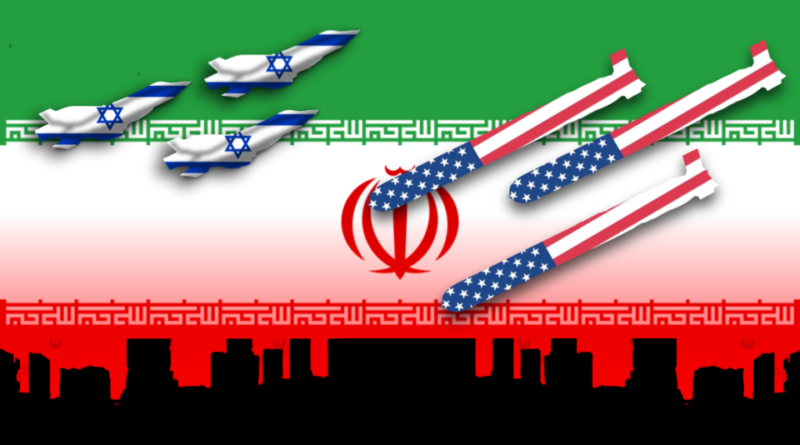
Airstrikes on Iran launched by the U.S. and Israel resulted in widespread destruction and the assassination of Rahbar Ayatollah Ali Khamenei [ka-muh-NAY] and close members of his cabinet on Feb. 28. These attacks have resulted in an undeclared war between the U.S, Israel and Iran.
Ayatollah Ali Khamenei came to power in 1989, succeeding Ayatollah Ruhollah Khomeini [koh-MAY-nee] as a mid-ranking cleric, which was unorthodox as only ayatollahs were allowed to reign until then.
His reign marked a major consolidation of power to the Rahbar, an increase in executions, greater religious policing, journalistic censorship including an internet blackout during mass protests in 2019, and stricter enforcement of women’s dress by religious police known as “Guidance Patrols.”
“I don’t agree with Khamenei as a dictator. I don’t think any country should be ruled by a dictator. He’s a product of Western colonialism, in the sense that Western powers have historically supported authoritarian leaders…with no regard to the fallout,” opined sophomore Athena Cheung.
The main justification from the US-Israeli side is that Iran was, according to President Trump, two weeks from creating a nuclear weapon.
“They can’t have nuclear weapons. It’s very simple. You can’t have peace in the Middle East if they have a nuclear weapon. And they can’t have a nuclear weapon, and they’ve been told that very strongly,” President Donald Trump said at a meeting of the Trump-created Board of Peace, meant to navigate the Gaza peace plan.
However, there is a lot of doubt as to whether or not these claims are true. Israeli Prime Minister Benjamin Netanyahu has presented seemingly anachronistic time frames ranging from less than a year to five years until the nuclear armament of Iran since 1992. In addition, the 2003 war in Iraq which created 36,000 U.S. casualties was based off of similar claims of armament, this time with weapons of mass destruction (WMDs), that were ultimately unfounded.
More recently, National Counterterrorism Center director Joe Kent has resigned over the rationale behind the strikes on Iran, claiming that “Iran posed no imminent threat to our nation, and it is clear that we started this war due to pressure from Israel and its powerful American lobby.”
While the Trump administration’s narrative is that all the strikes were on strategic military sites, the Iranian Red Crescent Society, a Red Cross-affiliated humanitarian organization, has claimed that over 6,668 civilian sites were hit.
“I feel like this should be one of the biggest worries because those two places are places where people want help and safety, especially with everything that has happened so far with this war…I think you should never strike a school or a hospital because they are places where people feel safe,” said junior Mikaela Fry.
One of the sites independently confirmed to have been struck was an all-girls school in Minab, a coastal city in Iran. This strike utilized Tomahawk missiles, a tool of the U.S. navy, in what witnesses described as a double-tap (a second strike minutes after the first to maximize human casualties) and resulted in the deaths of 180 children and schoolteachers.
When asked why students should care about the war in Iran, Amnesty International club officer Tais Nicolini opined, “Students should care because situations like this affect people just like them. For example, those 150 [sic] students—you never know, something like that could happen anywhere.”
Our “Greatest Ally” does not deserve our help. The US has little to nothing to gain to fight for Israel and the IDF. Yet why do we expend so many lives and money into an illigitamite state that is israel? The state of Israel would not prosper without the big brother benefactor that is the US. The same US they have sunk their parasitic fangs into, our banks, politics (https://www.trackaipac.com/), and media in which all skew towards the destruction of foundational western values to weaken the populous in all realms of personal human endeavor in order to defeat their greatest potential enemies from the inside to ultimately attain pax judaica.
The winners tell the tales. There’s a reason why they’re always the helpless victims in history.
Zionism will be the death of the west.